
FERTILITY SERVICES AT RIVER CITY OBGYN
Dr. Paoloni is pleased to offer fertility services for patients in Richmond

The desire to have a child is deeply personal. When getting pregnant doesn’t happen as planned, we understand the frustration. Dr. Paoloni is passionate about helping families achieve their dreams of becoming parents.
The River City OBGYN caring, supportive team is focused on helping you achieve a successful pregnancy, in a warm, personal and friendly environment. We know that you want to be a parent—not just a patient.
If you have questions about our fertility services or would like to schedule an appointment, call 804-362-0808.
Same Day Ovulation/Fertility Ultrasound Evaluation
At River City OBGYN of Richmond, Virginia, we understand that timing is crucial when planning your pregnancy. That’s why we are pleased to offer Same-Day Ovulation/Fertility Ultrasound Evaluations as part of our fertility services. Ovulation occurs when an egg is released from its follicle in a woman’s ovaries. This egg then travels through the fallopian tubes and toward the uterus in preparation for fertilization by the man’s sperm.
Prior to the egg’s release, the follicle will increase in size, signaling that ovulation will soon occur. Ovulation/Fertility Ultrasound Evaluations allow for Dr. Paoloni and the team at River City OBGYN to measure the size of the follicle and predict the time of ovulation so that you and your partner can best time intercourse or insemination.
What to Expect
Ovulation/Fertility Ultrasounds are typically administered transvaginally. You will be given a slender, long wand to place inside of your vagina as far as it will comfortably go. Our technician will then use the wand to emit sound waves, which help to create a digital image of your follicles. Our team will then measure the size of these follicles, and provide you with our best estimate of when ovulation will occur.
How to Get Started
Having a baby is one of life’s most precious and rewarding experiences. If you and your partner are planning a family and would like a Same-Day Ovulation/Fertility Ultrasound Evaluation, request an appointment with Dr. Paoloni and the team at River City OBGYN. Call us at 804-362-0808 or fill out the appointment request form on our website to get started.
hCG Trigger Shot Injections
An hCG trigger shot injection consists of human chorionic gonadotropin, the pregnancy hormone. Trigger shots are part of assisted reproductive therapy (ART) and are used to help prepare eggs to mature and leave the ovary. There are several instances when trigger shots are highly effective in helping a woman become pregnant, such as:
- When the woman does not ovulate or experiences anovulation
- Ovulation that is considered weak
- Ovulation needs to be controlled as part of other fertility procedures
Trigger shots are typically administered prior to ovulation and can be injected either under the skin or into the muscle.
How Do Trigger Shots Work?
hCG trigger shot injections allow for eggs to release from the follicles and travel to the fallopian tubes as part of ovulation.
Treatment of Anovulation and Polycystic Ovary Syndrome (PCOS)
Chronic anovulation is one of the most common causes of female infertility, accounting for as many as 30% of cases. It causes menstrual cycle irregularities, such as extended or shortened cycles, or no menstrual cycle at all. Ovulation (the release of an egg from an ovary) typically occurs about halfway through a menstrual cycle. If you are unable to ovulate, you cannot become pregnant (unless you have frozen eggs or use an egg donor).

Treating Endometriosis & Uterine and Fallopian Tube Issues
Endometriosis is a common and painful disease that affects about 5.5 million women in North America and is one of the top three causes of infertility in women.
What is Endometriosis?
During a normal menstrual cycle, the lining of your uterus — called the endometrium — begins to thicken in preparation for becoming pregnant. If you don’t become pregnant that month, your body sheds the endometrium during menstruation and the process starts over. In endometriosis, for reasons that researchers don’t entirely understand, tissue very similar to the endometrium begins to grow outside the uterus in various places that it shouldn’t. It can appear in or on the ovaries, the fallopian tubes, the various structures that support the uterus, and the lining of the pelvic cavity. Sometimes, it’s found in other places as well, including the cervix, vagina, rectum, bladder, bowel, and elsewhere.
The problem is that this tissue behaves like normal endometrial tissue — it builds up and breaks down with your menstrual cycle — but it can’t be shed like normal endometrial tissue during your period. As a result, the rogue tissue causes irritation and inflammation.
Symptoms Of Endometriosis
This buildup of tissue due to endometriosis can prevent the eggs from getting out of the ovaries or being fertilized by sperm. It can also scar and block the fallopian tubes, preventing the egg and sperm from meeting.
In addition to fertility problems, some common signs and symptoms of endometriosis include:
- Pelvic pain
- Painful intercourse
- Painful urination
- Painful bowel movements
- Severe abdominal pain
- Lower back pain
- Heavy periods or spotting between periods
- Fatigue
Some women with endometriosis do not have symptoms.
Endometriosis and Infertility
Most women who have endometriosis can conceive normally. But if you’re having problems getting pregnant, endometriosis may be the cause. To find out, your doctor may suggest a laparoscopy. In this procedure, a surgeon inserts a small camera through a tube into your abdomen to check for abnormal endometrial tissue. The surgeon might want to confirm the diagnosis with a biopsy.
If you’ve been diagnosed with endometriosis, you have several treatment options, depending on the severity of the disease. Medication, either alone or in combination with surgery, can often decrease inflammation and reduce pain. If you and your doctor opt for surgery, the surgeon can attempt to remove as much of the diseased tissue as possible. In some women, surgery significantly improves their chances of getting pregnant. You should know, however, that pregnancy rates tend to be lower for women with severe endometriosis.
Because some women with endometriosis have ovulation problems, another treatment option is the use of fertility drugs such as Clomid to induce ovulation. Injectable hormones also may be prescribed for the same reason. Once you begin to successfully ovulate, your doctor may suggest trying artificial insemination, in which sperm is inserted directly into your uterus.
Keep in mind that some standard treatments for endometriosis can either prevent pregnancy or, in the case of the hormone Danocrine, cause serious birth defects. Make sure your doctor knows that you are trying to conceive if you’re being treated for endometriosis.
Fallopian Tube Problems
Problems with the fallopian tubes also account for a significant percentage of infertility cases. Sometimes, the tubes may be blocked or they may be scarred as a result of disease or infection.
When an egg is released from one of the ovaries, it travels through one of the fallopian tubes, which are narrow ducts that connect the ovaries to the uterus. Normally, the egg will join with the sperm in the fallopian tubes during conception and the now-fertilized egg will continue on to the uterus. However, the fallopian tubes are extremely fragile. If they are blocked, there’s no way for the egg to become fertilized by the sperm.
The fallopian tubes can be damaged by diseases such as endometriosis, pelvic inflammatory disease, infections and sexually transmitted diseases.
Infertility and Fallopian Tube Problems
To determine whether your fallopian tubes are blocked, your doctor may suggest a laparoscopy or a hysterosalpingogram (HSG). In an HSG test, liquid dye is inserted by a catheter through the vagina (cervix) into the uterus. Then, X-rays are taken to see if there is a blockage or if the dye flows freely into the abdomen. Another method of HSG can be done with ultrasound instead of X-ray and that uses saline and air or foam. If you have problems with your fallopian tubes, your doctor may recommend surgery to correct the damage or unblock the tubes.
If you’re ovulating normally, your doctor might also consider assisted reproduction techniques that bypass the fallopian tubes entirely. These can include intracytoplasmic sperm injection (ICSI), artificial insemination directly into the uterus (IUI) and in vitro fertilization (IVF).
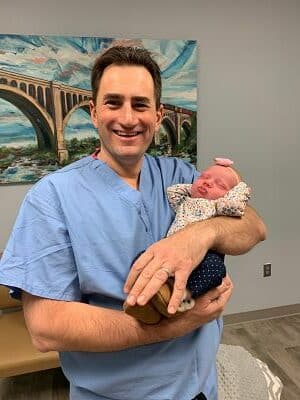
Fertility Services & Dedicated Early Pregnancy Follow-up and Support
River City OB/GYN of Richmond, VA is pleased to provide dedicated early pregnancy follow-up and supportive care for women experiencing problems in early pregnancy. Early pregnancy is defined as the first trimester or the first 12 -13 weeks of the gestational period in which women can experience a myriad of symptoms or issues that may require additional care and support. The first trimester is considered the most vulnerable time during pregnancy and is also the time during which the embryo is developing most rapidly. The goal of early pregnancy follow-up and support is to ensure that women receive the healthiest start in pregnancy and to provide a positive and nurturing environment in which women develop confidence and positive emotions that they can carry with them throughout the rest of the pregnancy.
One of the most common symptoms of early pregnancy is nausea and vomiting, also known as morning sickness. This can be normal; however, repeated episodes of vomiting can lead to dehydration. The risk of dehydration increases when nausea and vomiting become so severe that a woman persistently vomits throughout the day, loses weight and cannot hold down fluids. This severe morning sickness is often referred to as hyperemesis gravidarum.
Women who are experiencing this severe level of morning sickness may require IV fluids and special medications that can help combat nausea and vomiting. It is vital for the health of mom and baby that women maintain their nutrition during the first trimester. River City OB/GYN aims to provide the proper treatment for women experiencing hyperemesis gravidarum.
Dr. Paoloni and his caring staff want you to know that we are here to care for you throughout every moment of your pregnancy journey. If you have any questions or are experiencing any symptoms that are not normally present, please don’t hesitate to give our office a call at (804) 362-0808.
Request An Appointment With Dr. Paoloni
"*" indicates required fields
